(img alt= height="1" width="1" style="display:none" src="https://www.facebook.com/tr?id=826411655851847&ev=PageView&noscript=1"/)
13Sep

Janu Shirsasana(Head to knee pose )

The Janu Shirsasana name comes from the Sanskrit, “Janu” meaning “knee”and “Asana”, meaning “Posture”.

Steps with breathing

1. Sit in dandasana, with legs stretched straight in front and hands by your side.

2. Bend the left knee and keep the left foot close to the right inner thigh and the left heel near the right perineum

3. Extend the arms forward towards the right foot and hold it with the hands. First catch the toes of the right foot, then gradually catch the heel and finally extend the arms and catch the wrist of one hand with the other.

4. Exhale, move the trunk forward by bending and widening the elbows, and rest first the forehead, then the nose, then the lips and lastly the chin beyond the right knee.

5. Stay in this position with from half a minute to a minute.

6. Inhale, gaze at the front, straighten the arms, while extending the spine raise the arms up and slowly bring them down.

7. Straighten the left leg and rest in shithala dandasana. Repeat the pose on other side.

Adjustments

1. Left foot close to the right inner thigh and the left heel near the right perineum.

2. Bend forward from the waist while lengthening the spine.

3. In the final posture, extend the lumbar trunk by making the dorsal spine concave, elbows widened and forehead touching to the knees.

Variations

1. Catch hold of big toes.

2. Interlace fingers around the extended foot.

https://www.youtube.com/watch?v=o2UvsnzF85o

Benefits

1. Tones the liver and the spleen and thereby aids in digestion.

2. Increases flexibility in spine and back muscles.

3. It also tones and activates the kidneys.

4. Improves the function of reproductive system.

5. Person suffering from enlargement of the prostate gland will benefit by staying longer in this pose.

Contraindications

1. People suffering from knee and back problems.

2. High blood pressure.

3. Asthma and

4. Diarrhoea should strictly prohibit this asana.
13Sep

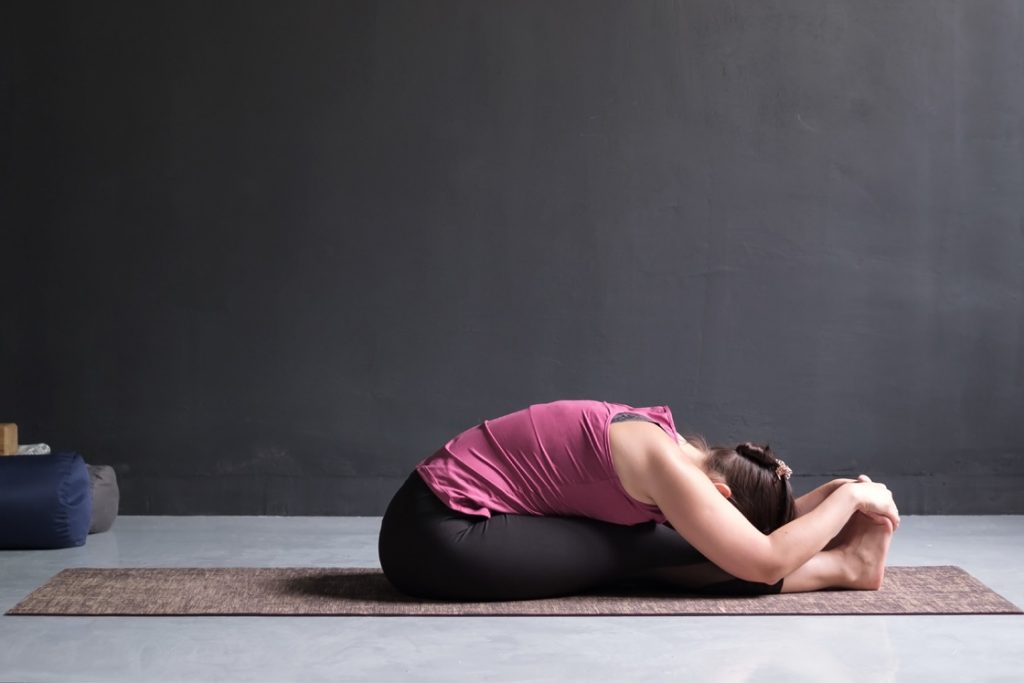
Paschimottanasana/(Seated forward bend pose )

The Paschimottanasana name comes from the Sanskrit, “Paschima ” meaning “west (back of the body from the head to the heel) ” and “Uttana,”meaning“intense stretch” and “Asana”, meaning “Posture”.

Steps with breathing

1. Sit in dandasana on the floor with the legs stretched straight in front. Place the palms on the floor by the side of the hips and shoulders rolled back.

2. Inhale, stretch the arms over the head, palms facing each other. By facing the palms forward, lengthen the spine, pull the belly in. Exhale, and bend forward from the waist line and catch hold of the big toes, extend the spine and try to keep the back concave.

4. Exhale, bend and widen the elbows and pull the trunk forward touch the forehead to the knees. It’s okay if the elbows are resting on the floor.

5. Stay for 30 seconds to a minute with even breathing.

6. Inhale, raise the head from the knees and arms over the head and relax in shithala dandasana.

Adjustments

1. Lengthen the spine with palms facing forward.

2. Bend forward from the waist.

3. Extend the lumbar trunk by making the dorsal spine concave.

4. Elbows widened with knees straight.

Variations

1. Catching big toes.

2. Hold the sides of the soles of the feet.

3. Lastly, clasp the fingers around the feet.

https://www.youtube.com/watch?v=QPTtzn-4R5E

Benefits

1. Rejuvenates the whole spinal column.

2. Increases vitality and improves digestion.

3. Stimulates the abdominal organs.

4. Helps to cure impotency.

5. It calms down the sexual urge too.

Contraindications

1. People suffering from severe back pain.

2. Slipped disc.

3. Sciatica and Hernia.

* * Special Offer for Early Bookings! * *

Book your Aerial Yoga TTC now and save €100 on your total fee.