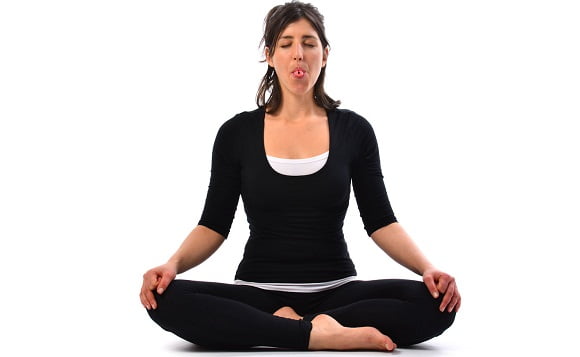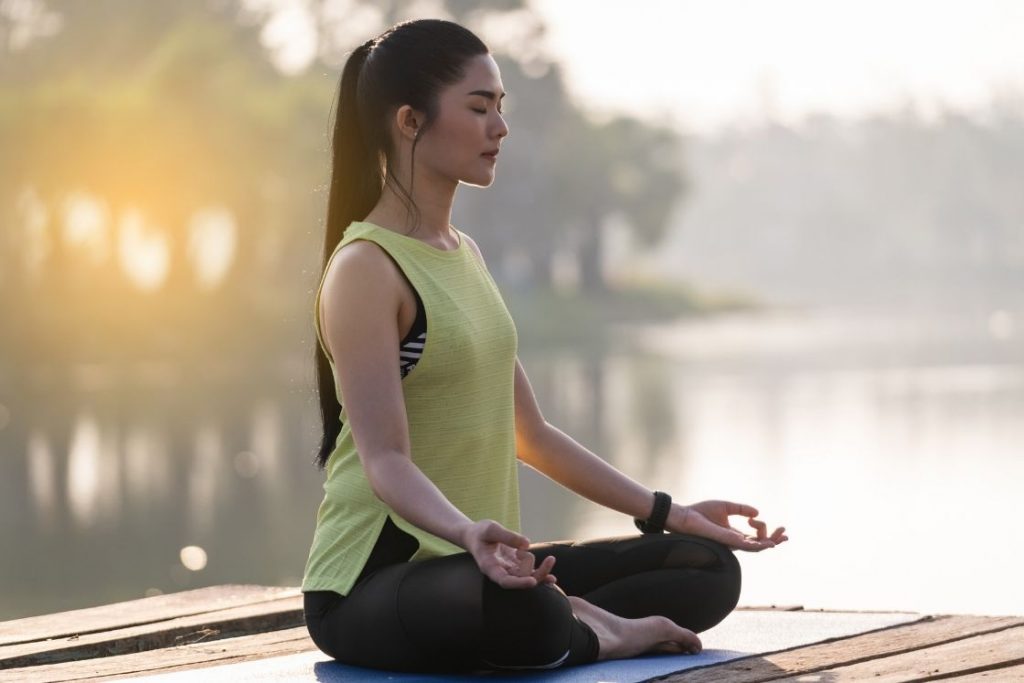
As per GhS (Gheranda Samhita) it is called as Bhalabhati. Bhala and kapala means one and the same that is cranium. Bhati means light or splendor. It also means as perception and knowledge.
In normal breathing,our inhalation is active and exhalation is passive whereasthis practice reverses this process.
All the chakra
There are 3 types (GhS):
- Vatkrama
- Vythkrama
- Sheetkrama
As per Hatha Ratnavali, it is little different and called as Kaphalabhastri Forceful and rapid inhalation and exhalation are accompanied with the movement of the head to left and right.
Vatkrama
As per HYP (Hatha Yoga Pradeepika)
अथ कपालभातिः
भस्त्रावल्लोह-कारस्य रेछ-पूरौ ससम्भ्रमौ |
कपालभातिर्विख्याता कफ-दोष्ह-विशोष्हणी || ३५ ||
atha kapālabhātiḥ
bhastrāvalloha-kārasya recha-pūrau sasambhramau |
kapālabhātirvikhyātā kapha-doṣha-viśoṣhaṇī || 35 ||
When inhalation and exhalation are performed very quickly, like a pair of bellows of a blacksmith, it dries up all the disorders from the excess of phlegm, and is known as Kapala Bhati.
In normal breathing, inhalation is active and exhalation is passive. This practices reverses that process so that exhalation becomes active and inhalation passive.
Begin 2 expulsions per second and gradually increased to 1 expulsion per second. Start with 30 expulsions and can up to 120.
Technique1: Perform series of rapid perspiration with the emphasis on exhalation. The exhalation should be strong and forceful and the inhalation is passive as of it is occurring on its own accord. Start from one breath per second and go until two breaths once you are comfortable.(3-5 sets)
Technique 2:Practice 20 until 40 breaths as per Technique 1 on completion of last exhalation, breathe in fully and hold the breath inside as long s you are comfortable. Then exhale completely. (3-5 sets)
Technique 3:Technique 1& 2 for 20-30 until 50 breaths and during retension of breath inside adopt 2 Bandhs i.e Jalandhara and moolabandha. (3-5 sets)
Note: Kapahalabhati should be learned only after one master Bhastrika pranayama.
- Rejuvenates tired cells and nerves.
- Tissues and cells absorb large quantity of oxygen.
- It cleanses the respiratory system and nasal passage.
- Removes the spasm in bronchial tubes.
- Apex (top) of the lungs gets proper oxygenation.
- Impurities of blood are thrown out.
- Makes one attractive and prevents ageing process.
- Spiritually helps to awaken Ajna (third eye) chakra.
- It completely voids the mind of all thought and vision and makes the practitioner completely introverted spontaneously.
- Improves the efficacy of any meditation practice performed after it.
Limitation:
- Any heart ailments-high blood pressure
- Hernia and surgery
- Mensuration and pregnancy
- Vertigo and epilepsy
- Coronary or respiratory ailments or any type of related disease.
Vythkrama (sinus cleansing):It is quite similar to JalaNeti. Basically vyuth means expelling.
Technique:
Practiced in standing position. Take the Bowl of warm saline water, lean forward and scoop the water up in the palm and sniff the water in through the nostrils and let the water flow down though mouth.
Sheethkrama (Mucus cleansing):
Literal means of Sheet is cool.
Technique:
Reverse the technique of Vyutkrama that is taking mouthful of water and expel it out through nostril
Note: After Vyutkrama and Sheethkrama practice Vatkrama for few rounds.
Benefits:
- Easily get rid of sinuses of old mucus.
- Makes one attractive and prevents the ageing process
- Relaxes facial muscles.
- Rejuvenates tired cells and tissues and nerves.