(img alt= height="1" width="1" style="display:none" src="https://www.facebook.com/tr?id=826411655851847&ev=PageView&noscript=1"/)
09Sep

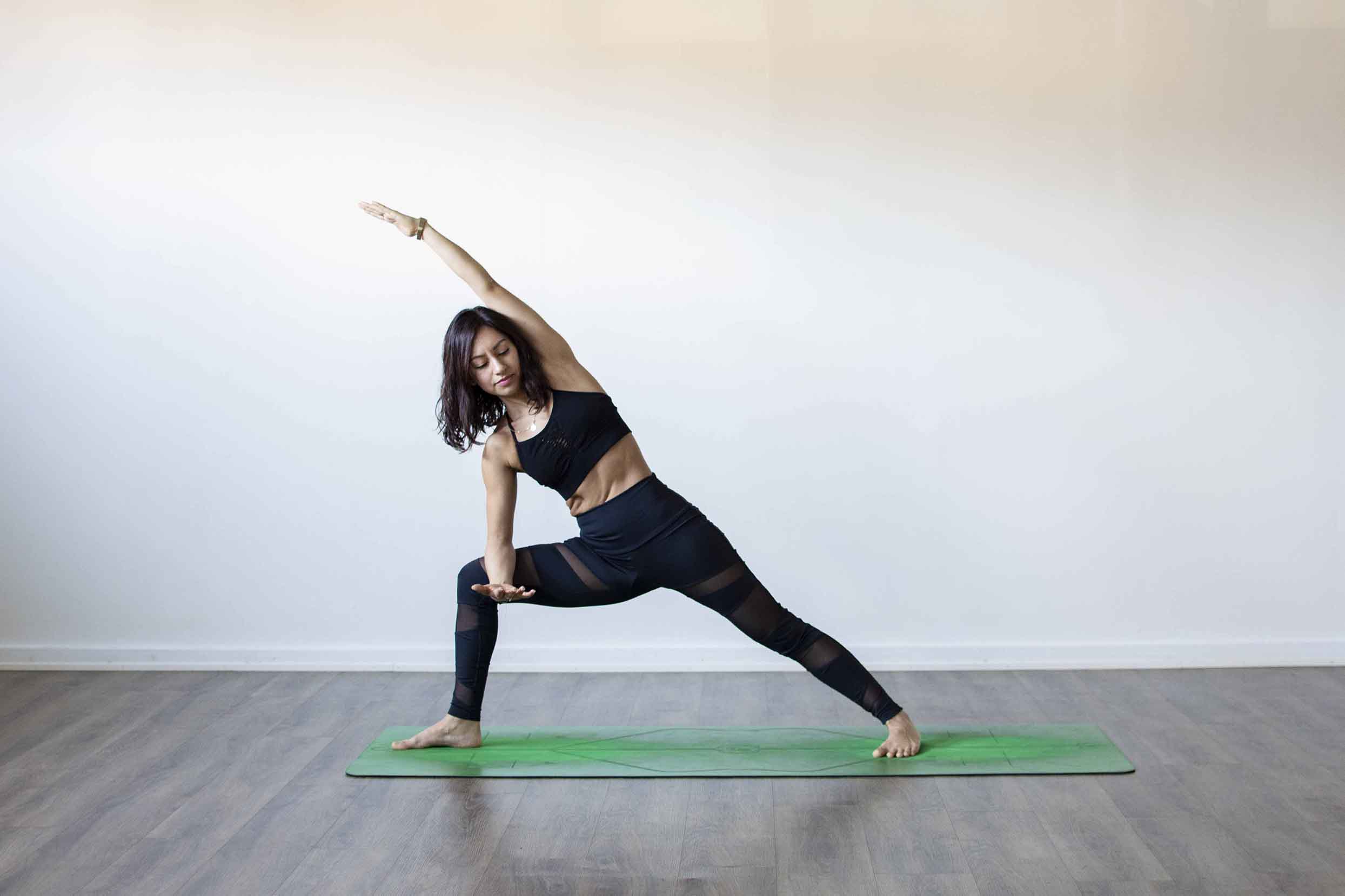
Parswa konasana (Side angle pose)

The Parswa konasana name comes from the Sanskrit,“Parswa” meaning “side” and “Kona,” meaning “Angle” and “Asana”, meaning “Asana”.

Steps with breathing

 Stand erect in “Parswa konasana” hands on the waist.

 Inhale feet apart by 3/4 feet or as much comfortable, point the right foot towards right side.

 While firming the left heel on the floor exhale and bend your right knee until right thigh is parallel to the floor and make sure knee doesn’t cross the toes.

 With inhalation bring the arms parallel to the floor, palms facing downward and gaze at the right middle finger.

 While lengthening the entire left side of your body with further exhalation bring the right torso on right thigh and place right hand’s finger tips beside the right foot touching the floor and stretch the left arm over the head and gaze at the left hand’s finger tips.

 Remain in this position from half a minute to a minute, breathing deeply and evenly. Inhale and extend the arms parallel to the floor, straighten the knee and exhale back in shithala taadasana.

Adjustments

Front knee should not cross the toes and make the 90 degree angle.

Thigh should be parallel to the floor.

Front heel should be in line with heel behind or it can be in line with the centre of the behind foot.

Weight of the body should be evenly distributed on both the legs.

Variations

Placing the elbow on the bent knee in case the extended hand’s palm is not reaching the ground.

Placing the extended hand’s palm in front of the bended leg’s foot and extend the other hand towards the ceiling.

Benefits

Relieves the stiffness in the back and shoulders.

Strengthens and tones up the ankles, knees and thighs.

Reduces the fat around the waist and relieves the sciatica and arthritis pain. .

It also increases peristaltic activity and aids elimination.

Contraindications

This asana is strictly prohibited for people with injury of knees, hips, spine, shoulders and ankles.

High/ low blood pressure

Diarrhoea

Insomnia

08Sep

MSRT (Mind Sound Resonance Technique)

Mind sound resonance technique (MSRT) is one among the advanced relaxation yoga techniques that use the mantra to come to feel the resonance, that chiefly works through the Manomaya Kosha (2 layers of existence) to induce deeper relaxation for each mind and body.

MSRT helps to overcome the fear of death, will increase vitality and releases you from the bondage or extreme attachments.

MSRT is a sophisticated program designed by Swami Vivekananda Yoga Anusandhana Samsthana (S-VYASA). The University is legendary for its cooperative analysis comes within the U.S.A and the U.K. The University’s work contains a presence in twenty countries worldwide.

The structure of MSRT is predicated on quite thirty-five years of in-depth study within the field of Yoga and Spirituality by S-VYASA. The analysis behind this program mostly follows the direction given by Swami Vivekananda; World Health Organization pronounced that we’d like to mix the most effective of West (modern scientific research) with the most effective of the East (Yoga and nonsecular lore) to bring a grand harmony and peace on earth.

It is a particularly powerful technique and uses sound vibrations (‘Ahata’ spoken and unspoken ‘Anahata’). It’s a method whereby resonance is generated throughout the body by the repetition of each hearable and mental sounds or mantras that revitalizes the interior energy. It harnesses the facility of positive resolve to beneficial and useful changes.

Mind sound resonance technique is one among the mindfulness-based relaxation techniques, during which chanting the very powerful mantras generates resonance. It ends up in deep relaxation of the mind and body. The apply of MSRT enhances relaxation, wellbeing, will power, etc. it’s identified to scale back the state of anxiety, pain, tenderness, and incapacity during a patient with chronic low back pain In another study MSRT reduced state anxiety and improved psychological feature performance now once they apply during a patient tormented by generalized disturbance.

MSRT will be practiced within the supine or sitting posture for well being, concentration, willpower, and relaxation. One unpublished study found that there was a major increase in gamma brain wave coherence (indicative of deep relaxation) than controls and a major reduction in STAI scores in healthy volunteers in thirty-two subjects as compared with controls. MSRT intervention additionally leads to a much better reduction in pain, tenderness, incapacity, and reduced anxiety in patients tormented by chronic neck pain.

Benefits of MSRT:

  •  Deep rest is gained in half-hour
  •  Reduced range of hours required for sleep
  •  Sound vibrations provide a sense of positivism to your life.
  •  Removes Stubborn Belief, Wrong Notions, Phobias, and Suppressed Emotions
  •  Improves effective time Management
  •  Brings in self-realization and a sense of oneness.
  •  Improve Work potency
  •  Improves decision making
  •  Fills one with peace, calmness, tranquility, and serenity
  •  Takes you nearer to Pure Consciousness.
  •  MSRT meditation is claimed to cure several diseases from physical to psychological.

This description is simply an introduction to the technique cyclic meditation, not the detailed technique. One ought to practice C.M. under a professional teacher.

08Sep

Yoga Nidra

Swami Satyananda Saraswati developed a scientific approach to yoga, categorizing physical position practices along side their corresponding advantages and contra-indications. He created the pawanmuktasana series of asanas as a preparatory for all major postures. He categorized the complete range of pranayama or respiration techniques in to three parts – Equalizing, Vitalizing, and Balancing – scientifically description the strategy and technique of every pranayama in progressive stages. He revived the classical raja yoga technique of pratyahara anantarmouna to affect the activities of the facets of the mind. Different well-liked meditation techniques that he tutored embody the mantra repetition observe of ajapajapa and also the concentration practice of Trataka. He additionally developed Yoga Nidra, which is from the traditional Tantric system of Nyasa as a scientific methodology for inducement of complete physical, mental and emotional relaxation.

The technique of Bihar school includes eight stages:

  • Preparation/Internalization
  • Relaxation
  • Sankalpa/Resolution
  • Rotation of consciousness
  • Breath awareness
  • Manifestation of opposites/ Rapid Visualization
  • Repeating Sankalpa/Resolution
  • Externalization.

Yoga Nidra It is a state of mind between wakefulness and sleep, which we enable practitioners to go on to the deep sleep without losing their consciousness.

In Yoga Nidra most effective means of practice is found in Sankalpa, which means resolution or positive affirmation. As our subconscious mind is obedient disciple it receives what we guided and in Yoga Nidra, we get to access all states of mind and Sankalpa is one, which uses our subconscious mind.

The technique is often used for psychic, physiological rest and rejuvenation. Yoga Nidra is among the deepest states of relaxation whereas it still maintaining full consciousness. The regular observation of yoga relaxation has been found to scale back tension and anxiety. The involuntary symptoms of high anxiety-like headache, giddiness, chest pain, palpitations, and sweating, and abdominal pain respond well.

When individuals head to sleep, they are doing not unburden all, they carry their frustration, miseries, sorrows, conflicts, turmoil’s with them, that leaves tension in body and mind. Mental tensions are the results of excessive mental activity; a mind is sort of a whirlpool, which can bind us in. At that moment our Buddhi (intellectual mind) is working, however, once you relax your intellect and permit the subconscious and unconscious levels of the mind to open, we have a tendency to stop troubleshooting. It’s for this reason that we have a tendency to set the Sankalpa (resolution).

Yoga Nidra is often practiced at your own place by listening recorded verbal directions or is often practiced underneath associate knowledgeable.

Every step has its unique and defined set of instructions to follow and more importantly through using these basic rules anyone can create their unique Yoga Nidra session.

When it comes to preparations it consists of muscle relaxation, awareness of sound, space and touch and affirmations, etc.

In Sankalpa, a positive intention which is brief, clear, and concise and should make it with faith and conviction. When it comes to rotation of awareness it should be systematic and momentum and in awareness or breath, can count the breaths or awareness of mantra and emotions along with breath can also be done. While finishing it with externalization, which is basically, means to bring an aspirant back to the original conscious waking state.

Yoga Nidra should be practiced after asana or pranayama or after some physical stretch. It can be practiced for 3/4 times a week to get best results. Starting with simple technique that is to start from 4 stages and followed by complex would be recommended for the aspirants.

In Yoga Nidra can be practiced at home, choose a room which is quite, comfortable temperature and free from insects. Privacy is essential and sudden interruption should be avoided. And it should be practiced in semi dark not in tots dark and total bright. During Yoga Nidra most important thing is not to concentrate fully and not fall in to slumber.

This description is simply an introduction to the technique cyclic meditation not the detailedtechnique. One ought to practice C.M. under professional teacher.

08Sep

Cyclic Meditation

Another methodology of Meditation developed in Vivekananda Kendra is Cyclic Meditation (C.M). A cyclic of alternating stimulation and relaxation is tool used make aspirants to reach the state of deep silence. A verse found within the ‘Gauda Pada Karika’ (commentary) of Mandukya Upanishad is the inspiration of this technique.

Laye sambodhayet cittam viksiptam samayet punah
Sakasayam vijaniyat samapraptam Na calayet. (Man. Karika-II.44)

(Meaning: Stimulate and awaken the sleeping mind, cool down the distractions, acknowledge the innate stagnation and keep in steadiness while not heavy it.)

In day-to-day life, we tend to relax deeply, though unconsciously, by stretching and restful through yawning. In Cyclic Meditation we tend to stretch consciously and consistently in a systematic order and then relax in standing asana like Pada Hastasana, Ardha Chakrasana, and Ardhakati Chakrasana and additionally relaxing using sitting asanas like Shashankasana and Ushtrasana. This provides stimulation at the muscular level. The method begins with Tadasana that helps to center our body. All the asanas performed with a slow speed maintaining internal awareness (observing, as a Sakshi, numerous changes within the system with eyes closed). Before beginning Cyclic Meditation, one should relax through a method known as I.R.T (Instant Relaxation Technique).

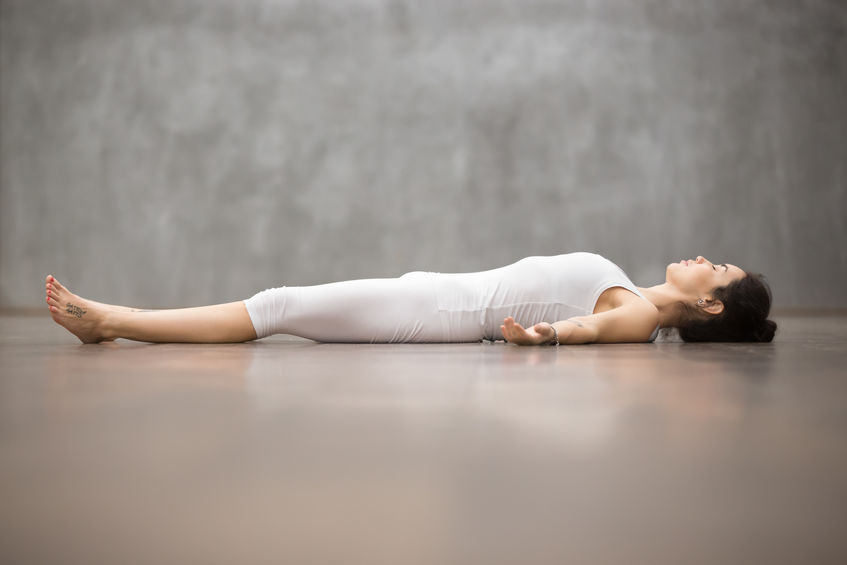
Instant Relaxation Technique: Lie down in supine position (in the position of Savasana). Tighten all the muscles from toes to head, half by half, and after tightening the entire body, relax the complete body instantaneously. This could also be practiced sitting on a chair to induce fast relaxation. It hardly takes few minutes of your time with instant relaxation to your body.

After active standing postures slowly, with awareness, one should perform which is called technique Q.R.T. (Quick Relaxation Technique). It takes 5-8 minutes.

Q.R.T: Coming back to Savasana. Observe the movement of abdominal muscles. Try to be aware of the movements of the abdominal wall going up and down, slowly and gently. With an inhalation, the wall rises up. Feel energized with every inhalation. With an exhalation, the wall collapses. Feel relaxed with every exhalation. Merge in deep silence by chanting gracefully one ‘A’ Kara (AAA sound).

After gently developing in sitting position from Q.R.T., perform slowly with awareness Shashankasana and Ushtrasana (Ardha Ushtrasana, if Ushtrasana not possible). Change posture back again in to Savasana for the technique called as DRT (also known as Deep Relaxation Technique). Here bringing awareness to each and everybody part-by-part starting from the toes to the head, which will take 10-15 minutes. After that, slowly sit down in deep silence for some time to witness the changes in the body and mind.

Apart from muscular stimulation in C.M., we tend to use sound (chanting of Akara, Ukara, Makara, and Omkara) and visual (attuning to the immense ocean) stimulations furthermore to travel deeper in silence.

This description is simply an introduction to the technique cyclic meditation, not the detailed technique. One ought to practice C.M. under a professional Yoga teacher.

08Sep

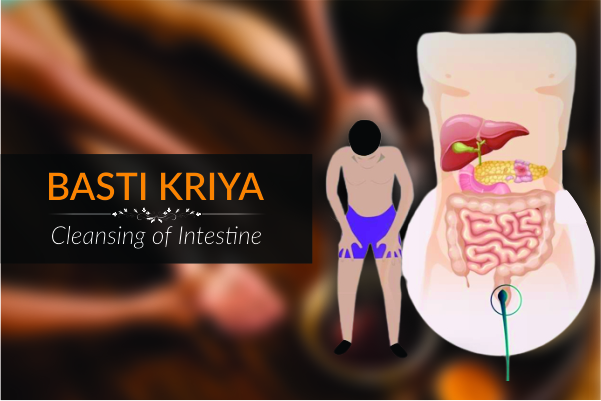
Basti (Cleansing of the Lower abdominal region)

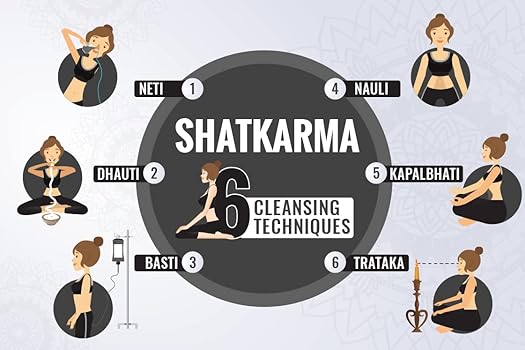
Basti basically a cleansing technique used to purify intestines.

Two variations Jala Basti and Sthala Basti

Jala Basti Technique (Yogic enema with water):

Remain in the naval deep water, insert index or middle finger in the anus by the process of chakri, and fill up the abdomen with water sucked through the water until once capacity. Wait for sometime and expel it out through anus.

It is to be noted that practice of Chakri (one of the kriya as per Hata Ratnavali) before commencing Basti.

Sthala Basti Technique (Yogic enema with without water):

Being in vipareetha karni mudra, bending the knee until chest and suck the air through anus and hold as long as possible and expel out. This can also be practiced adopting paschimottanasana (seated farward bend) but one must have prior knowledge of uddiyana bandha.

Benefits:

  • Stimulates gastric fire
  • Removes
  • Improves digestive disorders like constipation, indigestion
  • Enlargement of glands and spleen.
  • Increases appetite
  • Brings about a deep sense of well being removes disorders caused by vata pitta kapha.

Note: To perform this kriya one must know how to practice Bandha (uddiyana) and Nauli kriya.

08Sep

Neti (Nasal passage cleansing)

The word Neti refers to a smooth sheaf of cotton having different length used for purification of nasal cavity.

Types of Neti:

  •  Jala (Nasal cleansing through water)
  •  Sutra(Nasal cleansing through thread)
  •  Dugda (Nasal cleansing through milk)
  •  Ghrita(Nasal cleansing through Ghee)

The technique of Jala Neti:

A small Neti pot (specifically designed for this kriya) filled with warm saline water is used. Stand with more than hip-width apart and bend over, tilt the head to the right and place the opening of Neti pot in the left nostril. Open the mouth and breathe in through mouth until water comes out through right nostril (sometimes little water comes out of the mouth as well). After that close your right nostril and blow through the left nostril and it with others. Now you should repeat the practice using other nostrils using it Neti pot filled with saline water

.Note:

  • Blowing of the noesis very important so that irritation of the sinus and mucus membrane does not occur and has to be gentle.
  • Practicing of Kaphalabhati or Bhastrika is recommended as it dries the nasal passage and generates heat.
  • Too little salt creates pain in the nose and too much creates burning.

Benefits: 

  • Cleanses frontal sinus (cranium).
  • Cleans the sinus cavity and nose.
  • Keen eyesight removes all the diseases above the neck.
  • It exerts relaxing effect upon eyes by stimulating tear ducts and glands.
  • Promotes drainage of sinus
  • Releases muscular tension from face and maintain fresh and glowing skin.
  • Releases emotional tension.
  • Beneficial for anxiety, depression, epilepsy, hysteria.
  • Neti can be practiced every day if you have sinusitis, nosebleed, headache, eyestrain, cold, and insensitivity. Or else once or twice a week.

Contraindications:

  • Hemorrhage
  • Recent surgery of nasal tract.
  • The purpose of Neti is not only to clean the nasal passage but also to render the mucus membrane resistant to environmental changes.
07Sep

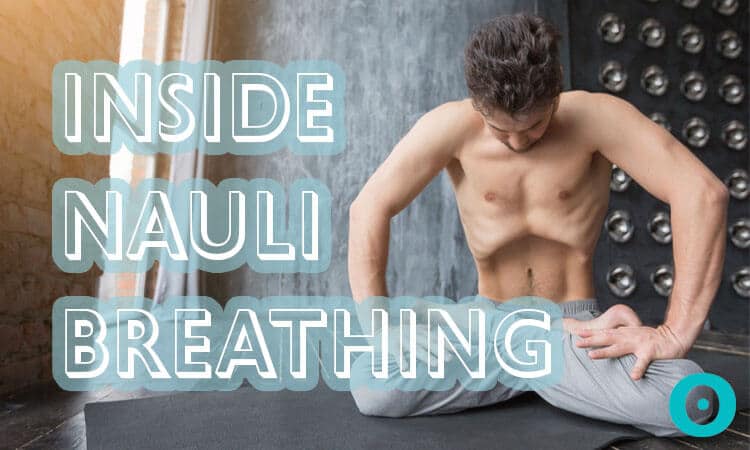
Nauli (Cleansing of the upper abdominal region)

Nauli is practiced using rectus abdominal muscles. In GhS it is called as lauliki.

Technique:

Stage 1:Feet’s apart with hip width distance, hands on the knees and slightly bend forward. Breathe in deeply through nose and exhale quickly through mouth and adopt Jalandhara bandha (sucking rectus muscles) and jalandhara (Thin towards the pit of the throat) while retaining breathe outside.Slightly lift the left hand off the left knee. This will helps to shift rectus muscles to left and stay for few breaths and by releasing bandha come to standing position and take few normal breaths, this is called Vama Nauli

Practice other way with Right side is called Dakshina nauli (stage 2).

Prepare for the same way like stage 1 and 2 and move your rectus abdominal to left and before moving to right hold them in the center is called Madhyama Nauli (Stage 3).

Prepare for the same way like stage 1 and 2 and move your rectus abdominal to left and back to the right continue rotating clockwise this and anticlockwise this is called Abdominal rotation or churning.

Benefits:

  • Stimulates digestive fire and removes all the problems related to digestion like indigestion, sluggish digestion.
  • Tones the abdominal, nerves, intestines, excretory, and urinary organs.
  • It generates heat in the body helps in the assimilation and absorption of food.
  • It alleviates constipation, acidity, flatulence, depression, and sexual and urinary disorders.
  • Alleviates emotional imbalance.

Contraindications:

  •  Heart ailments
  •  Hypertension
  •  Hernia
  •  Gastric or duodenal ulcer
  • Recovering from recent abdominal surgery.
07Sep

Dhauti (Purifying the upper respiratory tract)

Dhauti is a yogic cleansing technique aimed at purifying the upper respiratory and digestive tracts. It includes practices like Vamana Dhauti (vomiting), Danda Dhauti (using a soft stick), and Kapalabhati (forceful exhalation). These methods help remove toxins, improve digestion, and clear nasal and throat passages for better breathing.

Poorna Shakaprakshalana Technique:

Totally 16 glasses of water have to be taken in and expelled it through the anus. First drink two glass of water and perform a set of yoga asana that is

  • Tadasana
  • Tiriyak Tadasana
  • Kati chakrasana
  • Tiriyak Bhujangasana
  • Udarakarshana asana

After every two glass these five set of has to be followed in same specific order until water starts flowing out of the anus until the clear water come out (whichmeans stomach and intestines are perfectly clean).

Laghu Shakaprakshalana Technique:

There is a variation in this kriya, which is called an s Laghu (quick) Shakaprakshalana. In this kriya only 6 glasses of warm saline water is taken with set of above-mentionedasana.

Post Kriya: Simple kitchadi (Indian lentils (moong dal) with white rice cooked without any spices and salt less)

Note: As it is a major kriya dietary restrictions to be observed a week before and after the practice. Must be done under expert guidance.

In Hatha Ratnavalimentions use of jiggery water or milk water instead of salt water. There are also various herbs like few drops of lemon, onion or garlic juice. And second variation can use carrot or celery juice.

B. Vaman means ‘to vomit’ has two variations: Kunjala and Vyaghra Kriya

Technique 1: Kunjala Kriya

This has to be practiced early in the morning in empty stomach. Drink two to four glasses(1-11/2 liter) of warm saline water (1 table spoon approximately in 1litre water) until throat and expel it out. The position while vomiting is to bent over along with inserting 2/3 fingers inside to stimulate tongue root.

Technique 2: Vyaghra Kriya

Vyaghra means tiger. Just as tiger regurgitates its food a couple of hours after eating, same way in this kriya practitioner vomits the food three hours after the meal. Drink 1-11/2 liter of warm saline water and bent over along with inserting 2/3 fingers inside to stimulate tongue root and vomit out.

Post Kriya:

Sweet milk rice pudding should be taken after 45min of practice. Or Simple kitchadi (Indian lentils (moong dal) with white rice cooked without any spices and salt less)

C. From Danta Dhauti – Jihva Dhauti

Technique:

Jihva means tongue. Cleaning the tongue by rubbing it with the joined first finger and thumb in a downward motion and then squeezing it thoroughly.

Benefits of Dhauti kriya:

  • Removes all kinds of diseases caused by excess mucus.
  • Removes diseases like asthma, obesity, and disorders of spleen.
  • Good for skin diseases.
  • Cures abdominal ailments and fever

Contra indications:

  • Antar Dhauti is avoided in case of:
  • Stomach or intestine ulcers,
  • Hernia,
  • Heart disease,
  • High blood pressure.

All sets of Dhauti practices As per GhS(Gheranda Samhita) Antar Dhauti, Danta Dhauti, hrid dhauti and moolashodana.

07Sep

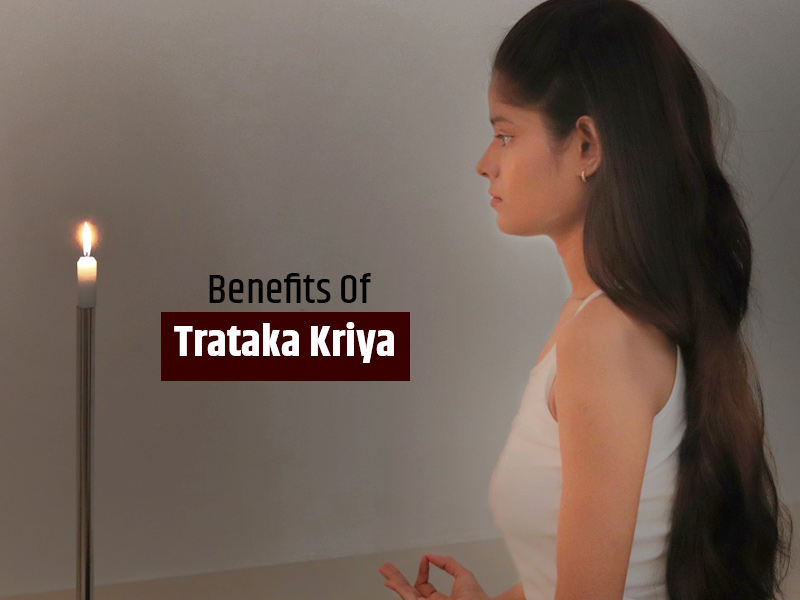
Trataka (Cleansing of Eyes)

Trataka is a yogic eye-cleansing technique involving steady gazing at a fixed point, often a candle flame, without blinking. It enhances concentration, strengthens eye muscles, improves vision, and calms the mind. This practice purifies the eyes and is also used to develop deeper focus and mental clarity in meditation.

  • Antaranga (internally)
  • Bahiranga (externally)

Antaranga (internal visualization):

The mind is trained to introvert. When operating through medium of the senses the mind loses energy, but when concentration is on an inner object, withdrawn from the senses, it gains energy.

Bahiranga (external visualization):

The concentration is on an outer object because this is easier for the untrained mind. Since the mind is attached to external objects. Concentrating on external objects like: Candle flame, A black dot, Psychic symbol, image of god, tip of the nose, sky, water, rising or setting sun, symbol of om, a flower sun set, yantra, mandala, crystal ball, a chakra,

Technique of Candle flame, the most beneficial for beginners:

Preparatory practices:

  •  Move your eye balls Up and down for 5-9 times and close your eyes and rub your palms, generate the heat and make a cup of your palm and place it around your eyes (simple Palming). After few seconds start with left and right followed by simple palming.
  • Next move your eye balls Diagonal right up and down for 5-9 times and close your eyes and rub your palms, generate the heat and make a cup of your palm and place it around your eyes (Press and release Palming). After few Diagonal left up and down followed by press and release palming.
  • Move your eye balls Rotational movement clockwise and anticlockwise 5-9 times each followed by constant palming with breathing (MMM Kara).

Technique:Preparations:

  • Get candles, candle stand and match box.
  • Wash your eyes with cool and clean water before starting the practice.
  • Flame is exactly at eye level when sitting and 
Sit 2-2.5 meter away from the candle stand.
  • Sit in Any Meditative Posture, make sure your spine, neck and head in one line, can also use chair

Gazing at the flame:

  • Slowly shift your vision to the base of the candle stand, middle of the candle stand then move to top of the stand, then to the base of the candle, middle of the candle and slowly look at the flame of the candle. Now, start gazing at whole flame without any effort.
  • Slowly look at the tip of the wick of candle and gazeat the small black cord. Focus your attention at one point. This is a practice of focusing and consecration. Keep on gazing. Use your will power. Let the tears come out and try not to blink your eyes. By practice the gaze become steady, making the mind one pointed.
  • Gradually widen your vision. Slowly de-focus your attention from the flame and have de-focused gaze on the flame. With expansive awareness, collect all the details of the flame such as color of the flame, shape of the flame and aura around the flame. Then observe the auras tarts expanding more and more and now it has completely covered the room and see the small light particles around the flame. Recognize the subtle changes achieved by de-focusing.
  • After one minute of de-focusing, gaze or focus on the flame. Slowly close your eyes and try to retain the image. Visualize the flame between your eyebrows and collect all the details with your eyes closed. When the image disappears go for palming.
  • Rub your palm and generate the heat and combine palming with Bhramari(humming bee sound). First apply constant pressure around your eyes, then inhale and chant Bhramari Mmm..; feel the vibrations of Bhramari throughout the body; repeat the same. Inhale- chant Mmm. As you exhale. Feel the sound resonance in the entire head region especially around the eyes.

Silence:

Feel the silence and relax for a while. After sufficient relaxation, gently drop your hands down. Sit quietly and feel the deep comforting effect of the practice. Beware of the changes taking place inside. Recognize that the mind has become completely calm; eyes are also feeling relaxed and mind in calm state.

Contra-indications:

  • Epileptics should not practice Trataka on a candle flame but should choose a totally steady object to gaze on.
  • Recent eye surgeries kindly avoid.

Benefits:

  • This practice Strengthens eye muscles improves eye sight
  • It balances the nervous system,
  • Relieving nervous tension, anxiety, depression and insomnia.
  • Improves the memory and develop good concentration, strong willpower.
  • It alleviates eye strain, head ache, myopia, astigmatism and even early stages of cataract (HYP)
  • It activates Ajna chakra and is an excellent preparation for meditation.
07Sep

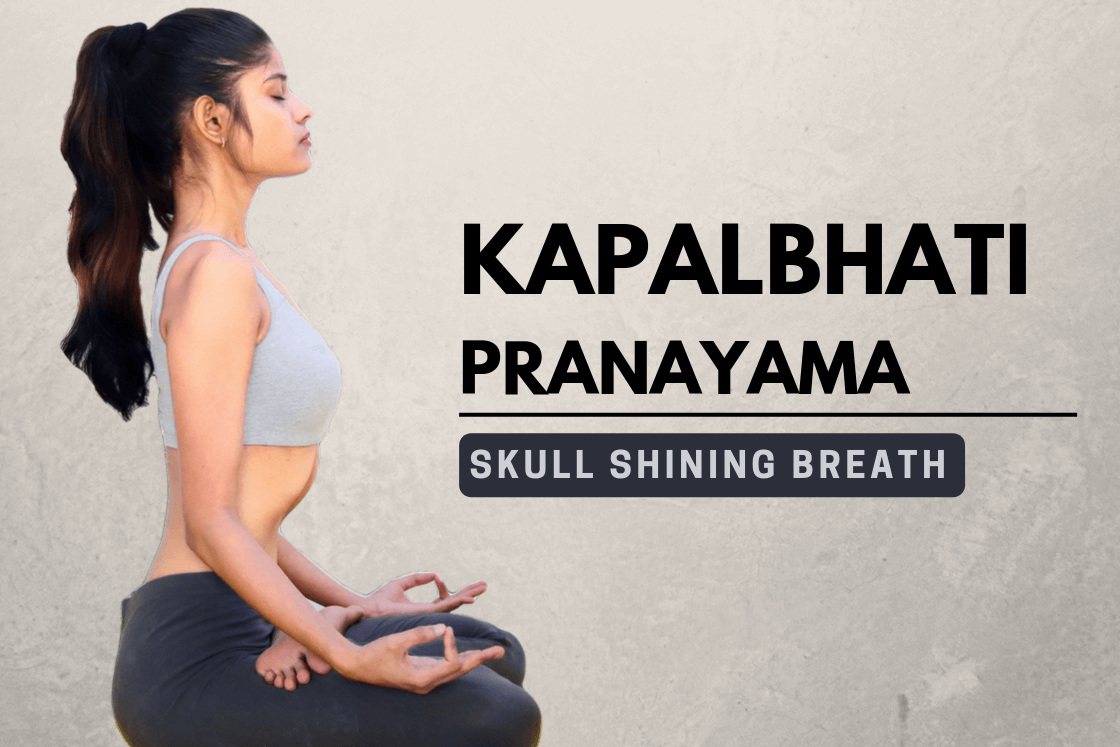
Kaphalabhati (Frontal brain cleansing)

Kapalabhati is a yogic breathing technique involving rapid, forceful exhalations and passive inhalations. It cleanses the frontal brain region, clears nasal passages, and energizes the mind. This practice boosts oxygen supply, improves lung function, removes toxins, and stimulates the brain, aiding in mental clarity and emotional balance.

As per GhS (Gheranda Samhita) it is called as Bhalabhati. Bhala and kapala means one and the same that is cranium. Bhati means light or splendor. It also means as perception and knowledge.

In normal breathing,our inhalation is active and exhalation is passive whereasthis practice reverses this process.

All the chakra

There are 3 types (GhS):

  • Vatkrama
  • Vythkrama
  • Sheetkrama

As per Hatha Ratnavali, it is little different and called as Kaphalabhastri Forceful and rapid inhalation and exhalation are accompanied with the movement of the head to left and right.

Vatkrama

As per HYP (Hatha Yoga Pradeepika)

अथ कपालभातिः
भस्त्रावल्लोह-कारस्य रेछ-पूरौ ससम्भ्रमौ |
कपालभातिर्विख्याता कफ-दोष्ह-विशोष्हणी || ३५ ||

atha kapālabhātiḥ
bhastrāvalloha-kārasya recha-pūrau sasambhramau |
kapālabhātirvikhyātā kapha-doṣha-viśoṣhaṇī || 35 ||

When inhalation and exhalation are performed very quickly, like a pair of bellows of a blacksmith, it dries up all the disorders from the excess of phlegm, and is known as Kapala Bhati.

In normal breathing, inhalation is active and exhalation is passive. This practices reverses that process so that exhalation becomes active and inhalation passive.

Begin 2 expulsions per second and gradually increased to 1 expulsion per second. Start with 30 expulsions and can up to 120.

Technique1: Perform series of rapid perspiration with the emphasis on exhalation. The exhalation should be strong and forceful and the inhalation is passive as of it is occurring on its own accord. Start from one breath per second and go until two breaths once you are comfortable.(3-5 sets)

Technique 2:Practice 20 until 40 breaths as per Technique 1 on completion of last exhalation, breathe in fully and hold the breath inside as long s you are comfortable. Then exhale completely. (3-5 sets)

Technique 3:Technique 1& 2 for 20-30 until 50 breaths and during retension of breath inside adopt 2 Bandhs i.e Jalandhara and moolabandha. (3-5 sets)

Note: Kapahalabhati should be learned only after one master Bhastrika pranayama.

  • Rejuvenates tired cells and nerves.
  • Tissues and cells absorb large quantity of oxygen.
  • It cleanses the respiratory system and nasal passage.
  • Removes the spasm in bronchial tubes.
  • Apex (top) of the lungs gets proper oxygenation.
  • Impurities of blood are thrown out.
  • Makes one attractive and prevents ageing process.
  • Spiritually helps to awaken Ajna (third eye) chakra.
  • It completely voids the mind of all thought and vision and makes the practitioner completely introverted spontaneously.
  • Improves the efficacy of any meditation practice performed after it.

Limitation:

  • Any heart ailments-high blood pressure
  • Hernia and surgery
  • Mensuration and pregnancy
  • Vertigo and epilepsy
  • Coronary or respiratory ailments or any type of related disease.

Vythkrama (sinus cleansing):

It is quite similar to JalaNeti. Basically, vyuth means expelling.

Technique:

Practiced in standing position. Take the Bowl of warm saline water, lean forward and scoop the water up in the palm and sniff the water in through the nostrils and let the water flow down though mouth.

Sheethkrama (Mucus cleansing):

Literal means of Sheet is cool.

Technique:

Reverse the technique of Vyutkrama that is taking mouthful of water and expel it out through nostril

Note: After Vyutkrama and Sheethkrama practice Vatkrama for few rounds.

Benefits:

  • Easily get rid of sinuses of old mucus.
  • Makes one attractive and prevents the ageing process
  • Relaxes facial muscles.
  • Rejuvenates tired cells and tissues and nerves.

* * Special Offer for Early Bookings! * *

Book your Aerial Yoga TTC now and save €100 on your total fee.